
Ghosting is when someone you've been talking to or seeing just vanishes. No breakup text, no "it's not you, it's me," nothing. One day you're chatting, maybe even flirting, and the next you're staring at an inbox that stays quiet forever. It's probably the most talked-about behavior in dating right now, and it has a quieter, sneakier cousin: fading. Both leave people confused, and both raise a genuinely tricky question about what decent behavior even looks like when we're all swiping through strangers on our phones.
So let's sort out what actually separates the two, why people keep choosing silence over an honest conversation, and how to deal with either one without losing your mind, whether you're the one disappearing or the one refreshing your phone wondering what went wrong.
Table of Contents
- What Is Ghosting in Dating?
- What Is Fading, and How Is It Different from Ghosting?
- Why Do People Ghost or Fade Instead of Communicating?
- Ghosting vs. Fading: A Side-by-Side Comparison
- How to Handle Being Ghosted or Faded Gracefully
- How to End Things Without Ghosting: Better Online Dating Etiquette
- Is Ghosting in Dating Ever Okay?
- FAQ: Common Questions About Ghosting and Fading
What Is Ghosting in Dating?
Ghosting is when you abruptly cut off all contact with someone you've been messaging, dating, or even seriously involved with, and you offer zero explanation. No warning. The conversation was normal, maybe flirty, and then poof. Texts go unanswered, calls hit voicemail, profiles go quiet or just disappear. No closure, just an empty inbox and a bunch of questions nobody's going to answer.
The word "ghost" as a dating verb crashed into everyday language back in the mid-2010s. That was the stretch when the big dictionary trackers, Merriam-Webster and Dictionary.com among them, started adding dating-specific definitions of "ghost" because people were using it constantly. And honestly, that alone tells you everything. This wasn't some rare thing happening on the fringes. It got common enough to earn its own word.
Ghosting can hit at almost any point. Some people ghost right after matching, before a single message even gets sent. Others do it after a handful of dates, or weeks and months into something casual. Timing isn't really the point. The defining feature is that total, unexplained silence. No "I'm not feeling it." No goodbye. Just a full stop.
If you use casual dating apps like Flirtup, where the whole idea is meeting new people fast and keeping things breezy, ghosting can feel almost built into the machinery. When connections come easy, they leave easy too. That doesn't make it hurt any less when you're the one getting the silent treatment, though. Even a casual chat can make you feel invested, and that's exactly what makes the quiet sting.
What Is Fading, and How Is It Different from Ghosting?
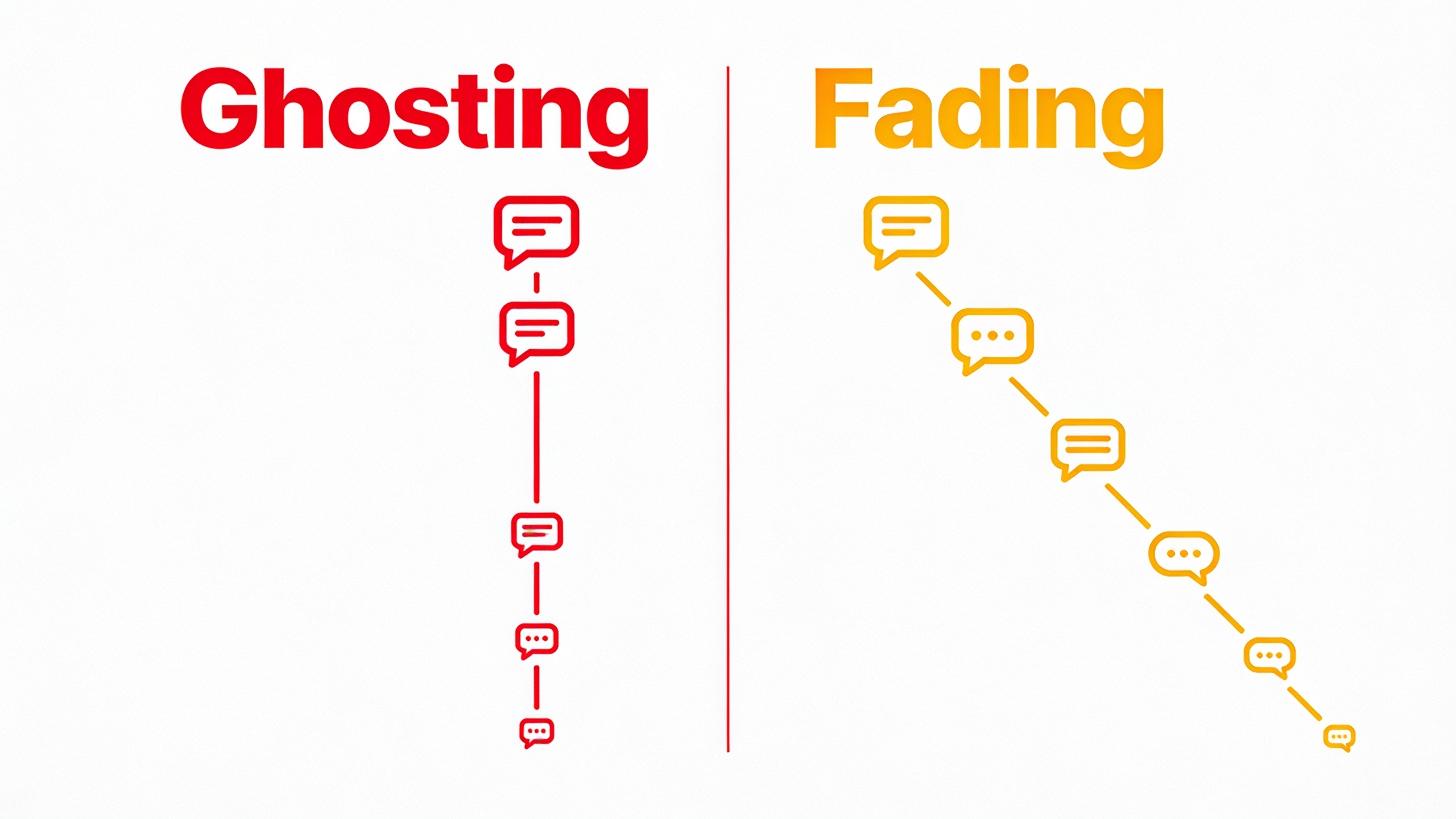
Fading is the slow-motion version. Instead of cutting you off all at once, someone gradually eases back. Shorter replies, longer gaps, fewer plans, until the whole thing just quietly dies. Where ghosting is sudden and total, fading is a drawn-out retreat that might take days or even weeks before you fully clock that, oh, this is over.
Think of it this way. Ghosting is a light switch flipping off. Fading is a dimmer being turned down so slowly you don't notice the room going dark until you're already sitting in it. Someone who's fading might still reply here and there, just later than usual and with way less energy. They'll "like" a photo instead of commenting. They'll fire back a one-word answer to a question that used to earn a whole paragraph.
And here's what makes it so maddening: fading looks exactly like someone just being busy. So you spend weeks trying to figure out whether they're genuinely buried at work or slowly checking out. That ambiguity is arguably worse than a clean ghost in some ways, because it drags the uncertainty out instead of ripping the band-aid off.
Both dodge the direct conversation, but fading tends to show up more in that murky in-between phase. You know the one. You've been talking a while, gone on a couple dates, and you're in the "are we dating or just vibing" zone where nobody feels like they've earned the right to demand a straight answer.
Why Do People Ghost or Fade Instead of Communicating?
People ghost or fade mostly to dodge the discomfort of confrontation, guilt, or an awkward rejection conversation. It's an emotional shortcut, not some calculated plan to wreck your day. Understanding the why doesn't let anyone off the hook, but it does explain why this stuff is everywhere.
The biggest reason is plain old conflict avoidance. Telling someone directly that you're done means you have to sit there and absorb their reaction. The disappointment, the questions, maybe the anger. Ghosting lets you skip all of it. Psychologists usually file this under avoidant conflict management, which is a fancy way of saying you'd rather have silence now than an honest talk that feels bad for two minutes, even though the silence causes the other person way more confusion in the long run.
Then there's the low-investment thing. After a few days of messaging or one date, a lot of people feel like the connection never hit the threshold that "deserves" a real goodbye. This is huge on apps built around volume, where you're juggling five conversations at once and just let the dead-end ones fizzle.
Speaking of juggling, decision fatigue is real. Managing a bunch of chats and potential dates at the same time is genuinely exhausting, and fading in particular often happens simply because someone doesn't have the bandwidth. The lower-priority chats get slower replies until they stop. Not malice. Just neglect.
There's also the fear of the awkward "no." Rejecting someone to their face, or even over text, feels confrontational, especially if you hate conflict to begin with. Ghosting sidesteps the whole vulnerable moment of saying "I don't want to see you again" and then having to watch how they take it.
And finally, it's just... normal now. Because everyone does it, a lot of people don't think twice. It's become what you do when you lose interest, and that normalization keeps the whole cycle spinning. When a dating culture treats disappearing as standard practice instead of bad manners, nobody feels like they're the one doing something wrong.
Ghosting vs. Fading: A Side-by-Side Comparison
Both ghosting and fading avoid the direct conversation, but they differ in speed, intensity, and how they land on the person left behind. Here's the breakdown.
| Aspect | Ghosting | Fading |
|---|---|---|
| Speed of withdrawal | Sudden, often within a single day or message | Gradual, unfolding over days or weeks |
| Communication pattern | Complete stop — no replies at all | Replies become shorter, slower, less frequent |
| Emotional experience for recipient | Shock, confusion, sometimes a clear sense of rejection | Slow-building doubt, uncertainty, second-guessing |
| Common stage it occurs at | Early matches, after one date, or mid-relationship | Ongoing conversations or casual dating phases |
| Clarity of the ending | Ambiguous but usually final | Very ambiguous — may not feel "over" for a while |
| Likely motivation | Avoiding an awkward direct rejection | Overwhelm, low investment, or slow loss of interest |
| Typical closure available | Little to none | Little to none, but recognized later than ghosting |
Neither one is "better" in any way that matters. Both leave you without an answer. But figuring out which one you're dealing with can at least help you stop checking your phone for a reply that's never coming, and get on with your own timeline instead of theirs.
How to Handle Being Ghosted or Faded Gracefully
The healthiest move is to treat the silence as your answer, stop yourself from firing off a string of follow-ups, and pour your energy into people who are actually showing up. It's an infuriating non-answer, I know. But choosing to read it as an answer anyway is usually the fastest way out of the funk.
Give it a reasonable window and then let it go. A day or two of quiet doesn't mean anything. People get busy, phones die, plans blow up. But if a week or more goes by with no response after you've reached out a few times, treat that as your signal. One follow-up message is totally fine. Five is not going to change anything, and it just stretches out your own waiting.
Also, please resist the urge to chase closure from someone who clearly isn't offering it. Wanting an explanation is completely natural. But hunting one down from a person who's already mentally left the building almost never gives you anything satisfying, and sometimes gives you nothing at all. In these situations closure has to come from you. You decide that the lack of a response is the response, and you move forward without ever getting the "why."
And whatever you do, don't take it as a verdict on your worth. Ghosting says way more about the other person's comfort with confrontation than it does about you as a partner. Someone who bolts instead of communicating is showing you how they deal with discomfort, which, honestly, is useful compatibility info, even if it arrives wrapped in a pretty unkind package.
Keep your options open, too. One of the perks of dating on a platform with a big, active pool of people, like Flirtup, which is built around meeting and chatting with real singles nearby, is that a single dead conversation doesn't have to torpedo your whole search. If one match goes quiet, there's no reason to freeze your dating life waiting for a resurrection. Starting fresh conversations is almost always more productive than refreshing an old thread.
That said, if you genuinely want clarity and the silence has been less than a week, one light check-in is fair game. Something like "Hey, just checking in, all good?" Nothing heavy. This sometimes shakes loose a reply, especially with fading rather than a full ghost. If it doesn't land? Take that as your confirmation and move on. No round two.
How to End Things Without Ghosting: Better Online Dating Etiquette
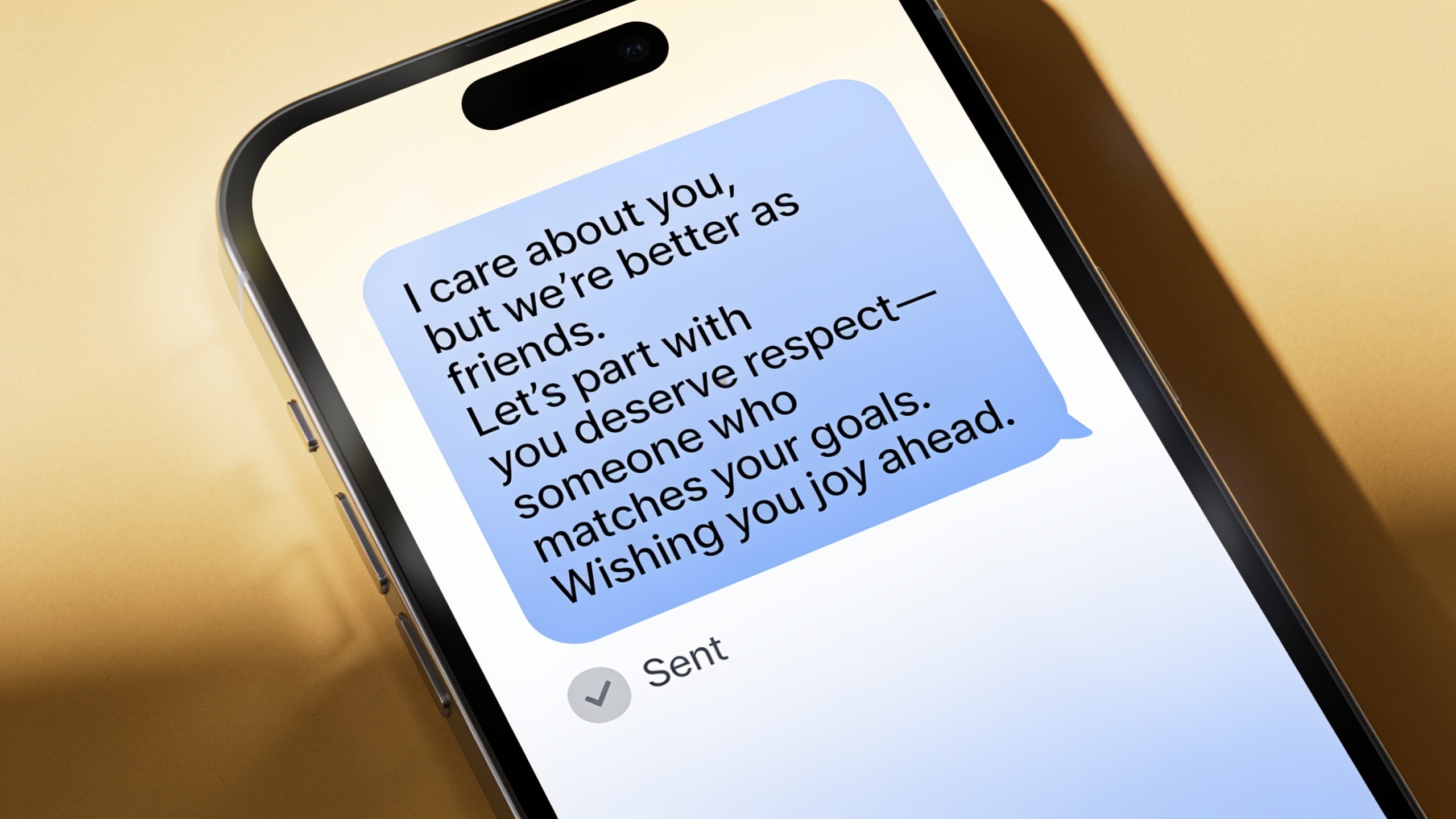
Good etiquette here just means giving the other person a quick, honest signal that you're out, instead of leaving them to guess. It doesn't have to be some big emotional production. A short, kind message usually closes the loop just fine.
A short message beats no message, every single time. You don't owe a stranger from an app a detailed breakdown of your feelings, but a line like "Hey, I've enjoyed chatting but I don't think we're a match, good luck out there" takes about ten seconds and spares them days of wondering. This matters even more after an actual date or a real stretch of conversation, where the other person has put in genuine time.
Match your exit to the investment. The etiquette bar should scale with how much energy got exchanged. A match that never turned into a conversation doesn't need a formal farewell. Just not replying to an opener is universally understood as "not interested." But after a few dates, ongoing texting, or anything that's starting to look like a budding thing, a direct message, even a brief one, is the decent move.
Be honest without over-explaining, either. You don't have to invent some elaborate reason or soften things with fake promises like "maybe another time" if you don't mean it. A plain "I don't see this going anywhere romantically" is kinder in the long run than a vague excuse that leaves a door cracked open when it really isn't.
Oh, and set boundaries around your own response time. Etiquette cuts both ways. If you're drowning in too many conversations, it's fairer to pause new matches or just be upfront ("I'm juggling a lot right now, sorry for the slow replies") than to let everybody fade at once. Being honest about your bandwidth is a tiny habit that cuts down a shocking amount of confusion.
The simplest test of all: think about how you'd want to be treated. If the silence would frustrate or hurt you, assume it'll do the same to someone else. Casual dating still involves real people with real feelings, and remembering that tends to make the whole experience better for everyone, including future-you, who's going to be on the receiving end of this eventually. Trust me.
Is Ghosting in Dating Ever Okay?
Ghosting is generally fine in very early, low-stakes situations, an unanswered opener or one forgettable date, but it gets harder to defend the more time and emotional investment you've both sunk in. Context matters way more than any blanket rule.
Sometimes it's genuinely understandable. Not replying to a cold opener on an app is basically a soft "no," pretty much the same as ignoring a cold sales pitch, and nobody should feel bad about it. It's also completely fair to cut someone off entirely when they get disrespectful, pushy, or make you feel unsafe. That's not rudeness, that's a boundary, and you owe zero explanation to someone who crossed a line. And after a first date that clearly flopped for both of you, with no follow-up plan and no conversation afterward, simply not reaching out again is a widely accepted, drama-free ending.
But there's a point where it gets tough to justify. After several dates or weeks of steady conversation, some kind of acknowledgment is expected, even a small one. When plans have been made and then silently abandoned, that's a different beast. Standing someone up through silence, never showing, never explaining, crosses from "quiet exit" into genuinely disrespectful. And in an established casual thing, even one with no labels slapped on it, disappearing without a word robs the other person of the basic info they need to move on and start seeing other people.
The thread running through all of it: the more real-world time, vulnerability, and logistics involved (meeting up, swapping numbers, meeting the friends), the more a direct goodbye becomes the fair thing to do. Even in dating cultures that are all about casual, no-strings connections.
Modern Dating Behaviors, Broader Patterns
Here's something I find kind of funny. Ghosting and fading aren't a romance-only phenomenon. The same avoidance shows up basically anywhere humans have to make a decision that involves a little social awkwardness. Real estate is a weirdly perfect example. Buyers browse listings, contact agents, book viewings, and then just... vanish when they lose interest, leaving agents guessing exactly the way a ghosted date does. Anyone who's spent time on a property search platform like Viviendalista scrolling through listings before deciding whether to actually request a viewing knows this behavior cold. Tons of initial interest, not much follow-through. Window shopping, then silence. Sound familiar?
Worth flagging one more thing, too. A lot of the content shaping how we think about dating, the advice columns, the etiquette guides, the relationship blog posts, is increasingly cranked out with AI writing tools. Platforms like RobinRank show how automated content creation has spread way past dating advice into basically every industry, which is part of why it pays to read this kind of stuff a little skeptically and look for specific, practical guidance instead of recycled platitudes.
FAQ: Common Questions About Ghosting and Fading
Is ghosting just normal in online dating now?
Pretty much, yeah. It's common enough that a lot of people half-expect it as a possible ending to any conversation, especially early on before anything real has formed. But common doesn't mean everybody's cool with it. Plenty of daters still find it annoying and would much rather get a quick, honest message.
How long should I wait before assuming I've been ghosted?
There's no official rulebook, but the general move is to wait a few days to a week after your last message before you call it, especially if you've already sent one polite follow-up and gotten nothing. Waiting much longer rarely changes the ending. It just drags out your own uncertainty.
So is fading worse than ghosting, or the other way around?
Neither's objectively worse. They're just two flavors of the same avoidance. Ghosting hits you with a sharp, sudden silence. Fading stretches the uncertainty out for way longer, which some people actually find more frustrating precisely because it takes so long to realize what's even happening.
Should I confront someone who ghosted me?
You're allowed to send a message telling them how the silence made you feel. Just go in with low expectations of a reply, because someone who ghosted specifically to dodge a conversation isn't likely to suddenly crave one. If you do reach out, keep it short and focused on your own feelings, not on demanding an explanation you'll probably never get.
What's the best way to make sure I'm not the one ghosting people?
Honestly, it's one small habit. Whenever you decide you're done with a conversation or a casual thing, send one short, honest message before you disappear. It costs you almost nothing and saves the other person from all that guessing, which is really the whole point of not being a jerk about this.
A Quick Note Before You Go
Ghosting and fading are both baked into modern dating, but neither one has to define how you handle your own conversations. Whether you're chatting casually on something like Flirtup or navigating something more serious, a little honesty, even just a quick, kind message, goes a long way toward making the whole thing less confusing for everyone. Including you.
🔥 Looking for casual dating near you? 💕 Meet new people, chat, and make real connections today! 📍
👉 Tap the link to get started and see who's nearby! ❤️
Sponsored | Affiliate Link 🔗


